by April Harris Jackson | Mar 18, 2026 | Elder Law, Estate Plan, Family, Health and Aging, Healthcare
Talking to your parents about aging, illness, and death is hard. It’s one of the hardest conversations you can have–but it’s also one of the most important. The feelings that might come up during the conversation, if uncomfortable, are better than the feelings that would otherwise come up when an emergency happens and there is no plan in place for taking care of them (or even a consensus among relatives on how to move forward). As we always say in our office: “it is better to have a plan and not need it than to need it and not have it.”
With that said, directly asking a loved one “hey, what would happen if you died today?” might not be the best way to start the conversation. So let’s consider some better alternatives to open the conversation about estate planning.
1. Tell your loved one what you’re doing for your own estate planning
Telling your loved one about your own estate plan, or your wishes to create your own estate plan, might make them consider making one themselves. Tell them what is in your Last Will and Testament, whether you have a Trust, and who you have chosen to act as your Power of Attorney. Hearing about your concerns for your own aging and death, and hearing how you’ve decided to navigate the future, will give them an idea of where to start, which is often the hardest part. Many people also struggle to decide on an estate planning attorney. It is important that the Nashville attorney they hire aligns with their needs. Hearing about your own process of hiring an attorney, and how you determined which one would be the right fit for you, can help them navigate the difficult world of hiring a Tennessee Wills and Estate Planning lawyer.
2. Talk about other situations that have happened that worried you or made you curious
Many of us know at least one person who has suffered the loss of a loved one and then had to endure the resulting feud among the family. These feuds happen so frequently that a significant number of fictional stories are based on them. Unfortunately, plenty of them could have been avoided if a clear plan had been put in place. And these feuds rarely start right after the death—many of them start much earlier, when the loved one’s health began to decline and someone had to step up to take care of them. Estate planning does not just mean deciding what happens after you die; it also means deciding what happens if your health begins to decline. If there is no plan in place for declining health, it will be up to the family to decide what happens. Even the closest of siblings can begin to resent one another if they feel that their parents’ care is not being handled properly.
Although it is fictional, the feud in This is Us between the siblings regarding their mother’s care is an accurate portrayal of what can happen in these situations. The siblings argued on what kind of medical treatment their mother should receive, and again on where she should live and who should look after her. Although all of the siblings had the best of intentions and loved each other and their mother, the feud nonetheless happened. The mother sensed the feud would escalate once her diagnosis advanced, and so she decided to name her daughter (her most level-headed child) as her healthcare power of attorney. Although the siblings still butted heads with one another, the daughter was able to carry out her mother’s wishes.
There are plenty of other examples in books and TV of families feuding over a loved one’s care or death. Talking about these hypothetical situations might make it easier to begin the conversation about aging and death.
3. Ask what would happen to their children, pets, and home if they were in a medical emergency
While discussions about aging and death might be intimidating, discussions about medical emergencies might be easier to handle. Medical emergencies can happen to anyone at any time. Our office even recommends that eighteen year olds get power of attorney documents in place, as it is important for them to have someone able to speak to medical professionals on their behalf in the event of an emergency. Since medical emergencies can happen to anyone, loved ones who do not like having their age pointed out might be more receptive to the conversation. If you know your loved one is anxious about having a stroke or falling down stairs, and tends to avoid or shut down conversation about either of those scenarios, it might be a good idea to use another medical emergency in your conversation (like a car accident, for example). While it is important for your loved one to confront their anxieties, it is not always our place to force them into a confrontation. Using a more neutral example (like the car accident) instead of one they constantly worry about might be a good way to ease them into the conversation.
4. Ask if they can show you where their estate planning documents are
After signing estate planning documents with our clients, we tell them to please let their family know their wishes and how to find the original documents. After all, the estate planning documents are only as good as the family’s ability to find them. In the event of a medical emergency or death, the signer of the documents will not be able to locate them. If no one else knows where they are or how to find them, the documents become effectively useless. It is therefore of the utmost importance that loved ones know where to locate the original documents. If you know or suspect that your loved one already has a plan in place, ask them where the documents are and how they plan to transfer the documents into the right hands in the event of an emergency or death.
For more information on how to talk to your loved ones about aging, illness, and death, we encourage you to check out The Conversation Project.

by April Harris Jackson | Mar 4, 2026 | Elder Law, Estate Plan, Family, Last Will and Testament
Tennessee law permits you to write your own will. Some people choose to handwrite theirs. Online services are another popular way to create a Will and other important documents inexpensively. As long as the Will meets the legal requirements, it is likely to be admitted to probate court in Tennessee.
However, just because you can do something doesn’t mean you should. Believe me, I love a bargain too- it can be really tempting to find a low cost option for something that is expensive and, well, a little scary. Most people have never met with an attorney before and the idea is intimidating. It’s understandable.
However, a fellow probate attorney once said “online services are a probate lawyer’s best friend.” This is the prevailing thought among probate attorneys, because we see so many Wills that were not prepared by attorneys, and ultimately end up costing the family more in court costs than it would have cost to meet with an attorney and prepare the Will and other important documents.
I like to compare it to pest control. You know that if termites invade your house, it will end up costing tens of thousands of dollars to repair the structural damage they can cause. Would you prefer to pay $150 per year up front to prevent an infestation, or let them do the damage and then pay to fix it?
So let’s look at some of the issues that cause self-created Wills to have problems when we go to court. Here are some of the main pitfalls that we see with DIY wills:
1. Improperly Executed
Unless you have legal training specific to estate law, you may not be familiar with the exact requirements of the type of document you are trying to create. Tennessee law provides for several types of Wills, and each of them have different requirements for signing. Some of them will require witnesses to come to court, which you may want to avoid. Fun fact: No Tennessee law requires a Will to be notarized. Guessing you didn’t know that!
2. Improper use or misunderstanding of terms
A Will uses a lot of terms that we don’t use in everyday life. These words are used to communicate information to the Judge when the Will is probated. However, if you are writing your own Will or using a form, you may not know the effect that these words have in practice. While our attorneys try to use more commonplace language when writing Wills, we need to be able to get your point across. Words like “fiduciary,” “per stirpes,” “per capita,” “ademption,” and “executrix” are not terms we use, but as experienced estate planning and probate attorneys, we know how to use them correctly to carry out the plan you have in mind. In DIY documents, you may ignore terms that you don’t understand that seem to be boilerplate, or may not fully understand the effect that they will have when your plan is carried out.
3. Missing essential elements
I’ll never forget the day that I had to tell someone that they were unable to help their parent because the Power of Attorney that had been created online did not give them authority to do what needed to be done. I wanted to help, but my hands were tied. In another situation, someone hand wrote their Will but left out an essential part. Because we didn’t have any specific instructions from the Will, we had to go to Court multiple times for Court approval to do things that we were pretty sure they wanted. Those court hearings cost the estate more money than it would have to have an attorney help with the original Will.
4. No contingency plan
One of my least favorite things to do is talk to parents about contingency plans. Usually this means asking who would inherit from you if your children died before you did. No one wants to even think about that. But for estate planning purposes, it’s very important to always have a back up plan. We hope for the best and plan for the worst. And that means discussing uncomfortable things.
5. Plans that are not logistically sound
In a social setting one time, someone mentioned to me that they had created their Will online. They were open to sharing about the experience and mentioned that they had named their parents as their beneficiaries in their Will. There’s nothing wrong with this, but it requires some additional thinking through things. Parents are older than their children, and in most situations the children will outlive the parents. At Graceful Aging Legal Services, PLLC, we want to help you create a plan that needs to be reviewed but hopefully requires few revisions except at big transitions in your life. If you pass away without making changes, we want your planning to go the extra mile for you. Let’s say that you name your parents as beneficiaries of your Will, but no back up beneficiaries. You figure you can update it later- but never get around to it. Eventually you pass with no named beneficiaries, which defeats the purpose of making a Will. An experienced estate planning attorney can help you avoid situations like this and worse.
6. No probate-avoidance planning
Another thing people are confused about is thinking that a Will helps avoid probate. It doesn’t. The purpose of a Will is for a probate court to know what you want when you die so they can carry out your wishes. In a meeting with a good estate planning attorney, you will talk about your goals for your assets when you die and create a plan. Oftentimes we are able to guide clients how to avoid probate. One of my favorite things is when someone comes to us for probate and we are able to tell them that good planning means that they don’t need to go to court.
7. Validate of the Will is easier to challenge
Although having options to create a Will yourself may be beneficial to some, it also creates opportunity for bad actors- or the perception that people are acting with impure motives. Imagine a scenario where your neighbor asks you to draft a will off the internet for them to sign. You may be called into Court to testify about how the Will was created, your neighbors medical condition at the time the Will was created, to what extent you helped, and if you inherited anything you’ll be looked at with additional scrutiny. Having a lawyer involved not only protects the Will and the Will-maker, but also the family and friends involved. We know how to prevent claims of undue influence and ensure the Will document is valid.
When you write your own Will, you don’t know what mistakes you might make. Unfortunately, by the time the Will is submitted to probate, you won’t be around to make clarifications. The Court will have to go by what is written in the Will. Your family will be stuck with what you wrote, or risk the Court finding that your Will is invalid and throwing out all of the work you did to create it in the first place. If your family thinks that you didn’t mean what you wrote, they will have to pay additional costs to help the Court figure out what you meant. When that happens, lawyers get more of your money and your family gets less.
We prefer to work with families who get along, and are on the same page when it comes to their loved one’s estate. It makes the probate process (if there is one), easier both emotionally and financially. We don’t like to make money correcting mistakes or with families who have been left in a difficult position. If you find yourself in this situation, we’re happy to help but we’d much prefer that you not be there in the first place.
If you have an online will or were thinking about it, sign up here for our virtual estate planning challenge to think through all of the things you need before you even meet with an attorney.

by April Harris Jackson | Feb 11, 2026 | Elder Law, Estate Plan, Family, Grief, Heirs and Beneficiaries, Last Will and Testament, Money, Probate, Trusts
If you’re closely related to someone who has recently passed away, it’s likely that you’ll be in line to inherit at least a part of their estate. It can be a complicated process, depending on the circumstances. To make this process easier for you, we’ve outlined some things you need to know as a potential inheritor of a Tennessee estate.
1. Take the time to grieve
If you’ve just lost a loved one, the first thing you need to do is take the time to grieve. This could be overwhelming, especially if you were close to the person who has passed away. You may not even know how to react if you’ve been left a large inheritance. Taking the time to grieve the death of a loved one is important, and you should not be pressured into making decisions. Also, don’t rush through any of the legal processes outlined in this article. There’s no need to hurry to open an estate, and you should make sure that you’re given enough time to make well-thought-out decisions and take care of things properly. All of the necessary information will be available to you once you are ready.
2. Take the time to understand the terms of the will
Another important thing to do is take the time to understand the terms of the will. If there was a will, then you’ll need to know who was named as the executor (aka personal representative) of the estate. You’ll also need to know whether there are any special provisions in the will, like leaving a specific piece of property to a specific person. You’ll want to know where the original will is being kept, as well as the executor’s contact information so you can stay informed about the progress of the estate.
Once the will is probated, there will be a record of it that you can access at any time. You’ll be able to see the contents of the will, as well as the names of everyone who was named as a beneficiary. This is something that you’ll need to keep in mind when communicating with the people who were named in the will.
3. Find out if there is any debt included with your share of the inheritance
Debt follows the person who incurred it, so a person’s debt usually belongs to their estate- not those inheriting from them. However, if your loved one left you anything with a debt tied to it, you may have to figure out how to resolve the debt before accepting the inheritance.
This includes things like car loans, mortgages, or other debts that your loved one may have had when they passed away. Even if you inherit something with debt tied to it, you do not have to inherit debt. You can choose not to accept the item or to sell it and take whatever it is worth after the debt is paid.
It’s important that you know if there is any debt included with your inheritance so that you can plan accordingly. It’s possible that you could get a loan to cover the cost of the debt and then pay it off gradually over time.
In my personal and professional opinion, it usually makes sense to take over a loan on something that will appreciate, such as real estate, but not on any depreciating assets like a vehicle. However, this is something that will have to be decided in consideration of your personal situation.
4. Find out what happens during the probate process
The probate process is the process of opening a probate estate, gathering all assets owned, and distributing the assets from the estate. During the probate process, the executor of the estate will file the will and any other documents that might be necessary with the court and has the responsibility of distributing the assets according to the terms of the will. These documents will become part of the public record. The executor of the estate will open an estate account with the court, and you can check in on it and see what progress is being made as the assets are distributed.
5. Check for Inherited IRA Rules and Taxes
If you inherit retirement accounts from a loved one, you will need to make a decision about how and when to cash out the account.
While spouses can easily “roll” retirement accounts to the surviving spouse, this is not an option for anyone else. As the non-spouse beneficiary of a retirement account, you have two options: (1) take all money out immediately or (2) you can “stretch” the distributions up to ten years.
Because most retirement accounts are “tax deferred” accounts, you will want to explore the tax consequences of any retirement investment accounts that you inherit. If your family member invested into a 401k, IRA, or similar type of account, they did not pay taxes when contributing to their retirement. That means that taxes must be paid when the money is taken out.
The financial institution will usually help you by holding an estimated tax payment but you will still want to make sure you are aware of what you will need to pay at tax time to account for those inheritances, no matter how you took the distribution.
6. Allow time for the Executor to carry out their duties
As soon as you’re named as a beneficiary to a will and the estate has been opened through probate, you can expect that the Executor will begin to take care of things, such as contacting creditors and making arrangements for the sale of any real estate. It’s important that you give them some time to do what they need to do. Expect that it will take about a year for the entire process to run its course. This is a rough estimate and will vary depending on how complicated the estate is, how many assets there are, if any estate tax is due, and whether there are any potential disputes. The Executor will keep you updated on progress and let you know when you can expect to receive the inheritance.
7. Communicate with the Executor
Keep in regular communication with the Executor of the estate. Ask if there is anything you need to do or can do to help. If you have questions, make sure that you ask the Executor and get the answers that you need to the point you understand. You can also ask to speak with the attorney for the estate. If you are having issues with the Executor getting back to you, or you suspect there are difficulties, it may be worth consulting a lawyer on your own.
8. Decide how you want to handle your share
Before you get a check, decide how you want to spend any money that you receive. Maybe you and your deceased loved one had already talked through what they hoped would happen with any funds they left you. Many people have a financial goal that their inheritance will help them reach, such as buying a house or investing in their own retirement. Some families use the money to take a trip together and make memories. Having a plan is the best way to make sure that your loved one’s legacy is honored.
9. Update your Plan
One of the most important things to consider is that receiving an inheritance could cause your own estate planning to need to be updated or revised. If you are currently the beneficiary of a trust or other estate planning document, you should contact your estate planning attorney to determine whether or not you need to make any updates.
If you are looking for a Middle Tennessee probate attorney or to create a Tennessee will, click here to schedule an initial call with us.

by April Harris Jackson | Jan 7, 2026 | Elder Law, Estate Plan, Family, Healthcare
After the US Supreme Court issued its decision in Dobbs on June 24, 2022, women’s equality and reproductive freedom were completely diminished by the state of Tennessee. How does the Dobbs decision impact estate planning? Here are some questions to consider:
Question: Will children born outside of my marriage have a claim to my estate?
Our opinion: Yes. Tennessee law dictates that Minors inherit from their parent’s estate.
How would a forced pregnancy affect a man who did not intend to become a parent?
We are not family law attorneys, and if you become aware of a pregnancy by a previous sexual partner, we encourage you to speak to an experienced family law attorney to discuss your options. Please keep in mind that many issues related to child support, pregnancy, and parental rights will be subject to new interpretations of the law under Dobbs.
However, there are laws in Tennessee that protect minor children from being disinherited by their parents.
For example, if a man dies, all of his minor children are able to inherit from him. While he can disinherit unknown, nonmarital adult children through his will, he cannot disinherit minors, even if he has a Will.
So let’s say a man lives in Tennessee and gets a sexual partner pregnant. If he dies while the child is a minor, the mother can petition (on behalf of the child) for a share of the estate. She will have to prove paternity but the child can be acknowledged in multiple ways. This includes communications with the father or testing the paternity via the DNA of the father or his other children.
Yes, you can be proven a father even after you are dead. It doesn’t matter if this child is born before or after the children of your current marriage or relationship- if they are under 18 when you die, they can ask the Court for a share of whatever you left behind.
Question: What is the impact of Dobbs on Estate Planning for those who expect to need fertility treatments?
Our opinion: We don’t know yet.
This is a really tricky area. My best guess is that matters related to artificial reproductive technologies (ART) will be legislated faster than before. We will know more about the impacts on individuals and families as matters work their way through the courts.
As your Estate Planning Attorney I will recommend that we plan for everything, including unborn children
If you’ve ever made an estate plan with an experienced estate planning attorney, you’ll know that we ask some pretty personal questions about your family planning.
That’s because we usually try to make our plans flexible enough so that future children can be included without needing to pay an attorney to update your Will or Trust. However, we will probably need to update documents more frequently given recent changes to the law.
Additionally, we will want to make sure that we try to be specific enough in our drafting to disinherit unplanned offspring from outside of relationships. The same goes for any previously frozen biological material that could potentially grow into a fetus. Yet another impact of Dobbs on estate planning to consider!
As fetal cells attain more rights, estate administration may become more difficult
As cells are legislated to have rights of their own, it will become more difficult to administer estates. For example, let’s say that a man dies after having frozen embryos with his ex-wife. By many state laws, those are now “children” under the legal definition. It would not be unfair for the ex-wife to say she is the mother of children who outlive him and should inherit his estate. If at some point those children were implanted-whether in the ex-wife or someone else- they would have needs as they grew older and the father’s assets could pass to them. However, it’s more likely that these cells would never be implanted or may be implanted but not be carried to term, at which point, who inherits from the embryo?
Question: What else should we be thinking about?
Our opinion: A lot of things will need to go through the Courts before we have final answers. In the meantime, here are some things I expect:
- Higher insurance premiums
- Higher medical bills
- Fewer OB/GYNs
- Fewer fertility clinics
- More single fathers.
- Push to create a biological/DNA database to track parents/putative parents.
- Doctors will be unwilling or unable to provide appropriate medical treatment for women undergoing miscarriages. This will make undergoing fertility treatments especially dangerous if you have had problems carrying a pregnancy to term.
- By effectively creating a system where there are two patients in one body, the law in many states now creates a conflict in the standard of care. The doctor will not be able to take direction from the pregnant person. This will cause more lawsuits against fertility specialists and other OB/GYNs. More lawsuits mean higher malpractice rates, which mean even higher costs for patients.
- Many surrogates will no longer be willing to help couples create families.
- Frozen embryos will no longer be intentionally destroyed.
- Fertility clinics may become unwilling to create embryos for future use if they will be unable to destroy the biological material.
- Many more babies will be available for adoption. So will older children.
- Fewer women will consider using ART, because the inherent risks of pregnancy will no longer be treatable.
- There will be fewer medical advances for difficult pregnancies due to women choosing not to have children.
- Young adults will begin long-term contraception at earlier ages.
These are just some things I’m considering as we enter this new legal landscape.
In conclusion
The implications of the Dobbs decision is completely unknown. However, we do know that it will have a huge impact on Estate Planning. If you’re looking for an attorney in Nashville who can create a thorough will, look no further. Attorney April Harris Jackson will consider everything, including the implications of Dobss on family planning.
by April Harris Jackson | Oct 22, 2025 | Estate Plan
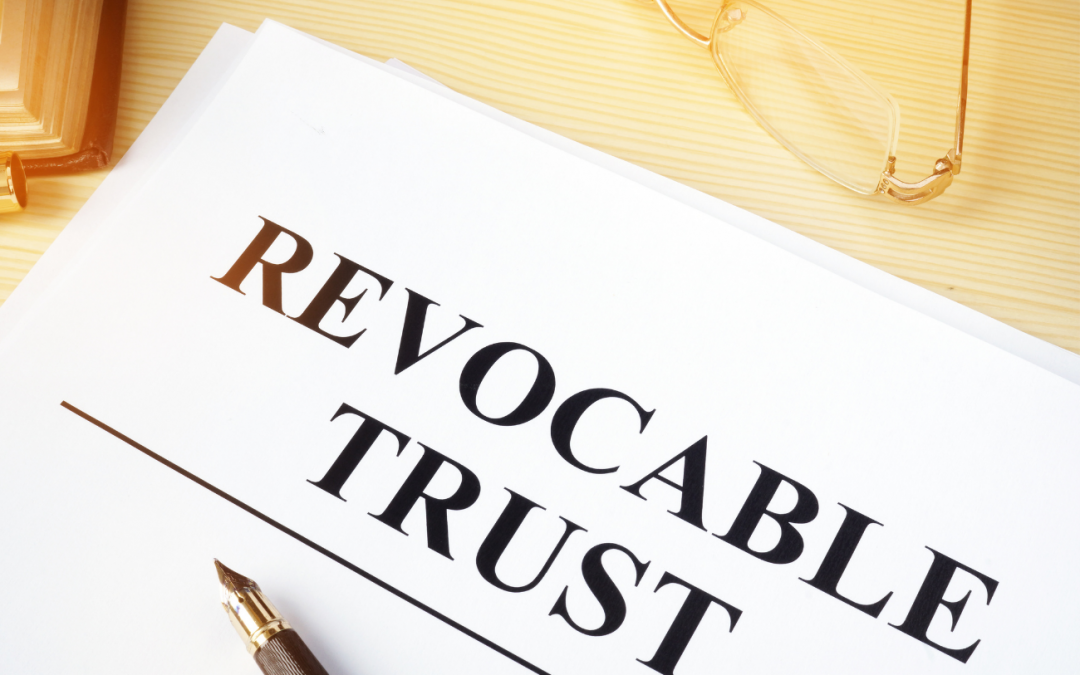
Trusts are an excellent tool for estate planning and asset protection purposes. The most common type of trust is a Revocable Living Trust, which holds your assets and helps avoid the probate process when you pass away. However, Revocable Living Trusts do not help much when it comes to asset protection planning.
What Can I Do with a Revocable Living Trust?
A Revocable Living Trust is an essential tool for avoiding probate. If you own enough assets to qualify for a full probate proceeding when you pass away, then you will most likely benefit from a Revocable Living Trust. Assets placed in the trust, such as a home and financial accounts, can pass to your beneficiaries without going through the probate process. This saves your loved ones time and money and provides a level of privacy for your personal affairs. A successor trustee of your choosing can also manage any finances you place in your Revocable Living Trust if you ever become incapacitated, or even if you just do not care to handle your own financial affairs anymore.
Will a Revocable Living Trust Protect My Assets?
Revocable Living Trusts do not protect assets from financial predators. If you owe money to creditors, then those creditors may take assets from your trust, even though the trust is technically the legal owner of the assets. Your Revocable Living Trust is not suitable for asset protection purposes because you are still considered the owner of the assets if you are the trustee because you have complete control over the trust. There are no restrictions on how you can spend the assets in the Revocable Living Trust, and you can revoke the trust at any time. Revoking the trust means the assets will revert to your direct ownership, putting them back under your control. In addition, all assets in the Revocable Living Trust are reported to the IRS for tax purposes under your Social Security number, meaning there is even less separation between you as an individual and the Revocable Living Trust. This is different from Irrevocable Trusts, which have their own tax identification numbers.
If you are interested in learning more about how certain Irrevocable Trusts can be used for asset protection purposes, or if you’d like to learn more about estate planning with a Revocable Living Trust, simply set up a consultation with a our Nashville trust attorney to talk about how we can help.

by April Harris Jackson | Oct 8, 2025 | Estate Plan
Have you ever wondered what is the worst that can happen if you become incapacitated or pass away without an estate plan in place?
If you have, you’re not alone. This is actually a common question that I receive as a Middle Tennessee estate lawyer, especially from those in close-knit families who believe that their kids (or other loved ones) will peacefully sort everything out when they pass away without needing any additional legal documents or guardrails in place.
Failing to Plan Makes Life Harder for The People You Love
The truth of the matter is that without a plan (or even the wrong plan) you make things much harder for the people you care about, even if everything goes as smoothly as possible and everyone gets along. Managing your affairs will also become much more costly and more time-consuming than they need to be if something happens.
You May Not Like The “Default Plan” The State of Tennessee Already Has for You
Remember, you are not obligated to create an estate plan; the state of Tennessee already has a plan that your loved ones will be forced to follow in the event you do nothing. The only way to override the state’s plan is to legally create one of your own.
What If You Are Incapacitated?
If a crisis happens during your lifetime and you don’t have a plan, you run the risk of losing flexibility and you may even lose control. Even if your loved ones want to help if you become incapacitated, they could be barred from getting involved with your affairs because of HIPAA laws or other privacy policies. If that happens, all decisions about your care and your future will be made by people who don’t know you or what is important to you.
Make Planning a Priority to Protect Your Family, Your Wishes, and Your Assets
The bottom line is that an estate plan is a roadmap that’s designed to make life as easy and hassle-free as possible for yourself and your loved ones in the event of illness, incapacity, or death. It’s one of the most loving gifts you can give. If this article has caused you to rethink your current plan for your affairs, we are here to help you. Simply contact our Middle Tennessee law office at (615) 846–6201 to schedule a consultation.